Retention Marketing 101: Start Here
The operating map for a modern email and SMS program: consented list growth, flows, campaigns, segmentation, deliverability, design, and reporting.
- Map the parts of a modern retention program
- Choose the next lesson based on the system gap
No prior lesson required.
What does a modern email and SMS program actually look like?
A durable retention program has seven connected capabilities: consented list growth, lifecycle flows, campaigns, segmentation, deliverability, design, and reporting. ZHS uses the operating ranges below as shared context, but no single range is a forecast for a particular brand.
Start with permission and event data. Then create the high-intent journeys, make campaigns consistent, segment responsibly, protect deliverability, and report on definitions your team can repeat. Each layer makes the next one more useful; none of them is a substitute for the rest.
Retention is not a send button. It is a system that gives a known person a relevant next step after they consent, browse, purchase, or become inactive. Its commercial value depends on the product, margin, repeat cycle, acquisition quality, list health, and measurement method.
Prefer to watch? Here is the video version:

Klaviyo is the ZHS default for the DTC programs documented here because it supports the workflows we use. It is not a universal answer. Choose a platform based on your commerce stack, channels, data model, team, budget, and migration risk; document the choice before building deeply into it.
What are the parts of an email marketing program?
The parts are consented list capture, flows, campaigns, segmentation, deliverability, design, and reporting. Their order matters because every downstream message relies on a real audience, reliable data, and the ability to reach the inbox.
What are the parts of an email marketing program
- 01List capture
Offer a clear value exchange, record consent correctly, and preserve the acquisition source so the first message can match the promise.
- 02Flows
Automate relevant messages around identifiable lifecycle moments, with clear entry criteria and exits.
- 03Campaigns
Plan audience, message, offer, and calendar context before sending; use the program to maintain useful ongoing contact.
- 04Segmentation
Use consent, engagement, purchase behavior, and product context to decide who should receive a message.
- 05Deliverability
Authenticate the sending domain, protect list quality, monitor complaints, and respect engagement signals.
- 06Design
Make the message legible, accessible, on-brand, and clear about one primary action across devices.
- 07Reporting
Record definitions and attribution, compare like cohorts, and use one testable question at a time.
ZHS operating map. The parts reinforce one another and should be reviewed as a system.
Flows vs campaigns: where does the money come from?
Flows are behavior- or lifecycle-triggered journeys; campaigns are planned sends to a defined audience. Both matter, but they should be reported separately because they have different entry rules, timing, ownership, and diagnoses.
| Journey type | Primary job | What to verify before launch |
|---|---|---|
| Flows | Respond to a defined lifecycle moment with a relevant next step | Trigger, eligibility, exits, overlap, consent, creative, and measurement |
| Campaigns | Create useful ongoing contact around a calendar, offer, or brand story | Audience, frequency, offer truth, deliverability, creative, and reporting definition |
Start with the high-intent journeys your store can support: a welcome journey, browsing and abandonment journeys where tracking is reliable, post-purchase education, and the next product-appropriate lifecycle step. The exact sequence and cadence belong to the relevant flow guide and the brand's current program, not a generic checklist.
If the flow contribution is outside the canonical operating range, audit coverage, eligibility, triggering data, offer relevance, timing, and creative before assuming campaigns are the only issue.
Why isn't my email set up making money?
Usually because the program is incomplete, the audience is not well defined, or the team cannot tell which change created the result. Start by checking whether consent, list capture, event data, high-intent flows, campaign discipline, deliverability, and reporting are all present before treating the issue as a copywriting problem.
Never treat marketing consent as automatic. Use clear, channel-specific permission and preserve the source of that permission. Consent and privacy requirements vary by channel and jurisdiction; use the current platform guidance and qualified counsel for the program you are launching.
Growth starts with a clear, honest value exchange and an experience that matches it on the next page. Keep the form, offer, consent language, welcome message, and landing experience connected so a new subscriber understands exactly what they requested.
Plan list growth without invented outcomes
Eligible visitors × observed signup rate = new consented subscribers- Use actual eligible visitors, not all traffic by default.
- Keep the offer, targeting rules, and consent definition constant before comparing a test.
- Measure downstream subscriber quality, not signup rate alone.
A planning formula, not a forecast. The observed rate should come from your own comparable traffic and form rules.
Do not jump straight to campaigns because they are visible. A weak list, unclear consent, missing flows, or unreliable tracking will make campaigns look worse than they are and can create a deliverability problem.
Where should you go next?
Choose the next lesson from the largest system gap. If you need the full build order, begin with the roadmap. If you need a shared reporting definition, begin with revenue benchmarks. Otherwise move into the layer that is currently blocking the program.
| You want to... | Start with |
|---|---|
| See the full build in order | The Klaviyo Roadmap |
| Establish a shared revenue definition | Email Revenue Benchmarks |
| Grow the list responsibly | Popup Strategy |
| Build the automations | The Welcome Flow Guide |
| Improve planned sends | Campaign Calendar |
Get Expert Help
Our team can audit the current program, document the operating gaps, and build the parts that are ready to launch.
If you would rather have experts install the map in a deliberate order, we can define the scope from the systems and goals you have today.
More patterns to study
Curated creative references for this lesson. Study the mechanism, then adapt it to your own audience, offer, and evidence.

Pick up where your diet leaves off.
Pattern: your diet is missing bacteria your gut needs.
Use it here: Lead with one useful gap or question the reader can recognize, then let the product be the answer rather than the entire message.
Open reference in new tab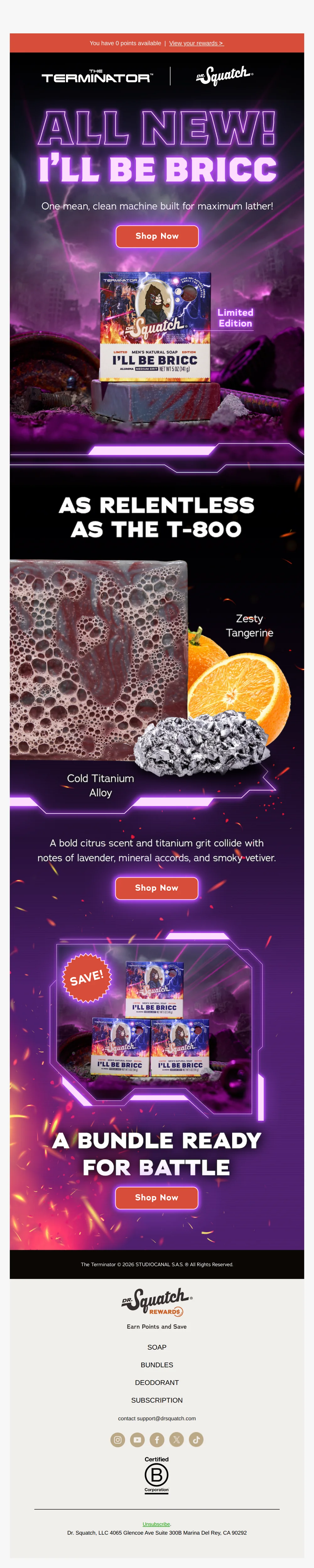
I’ll Be Bricc is HERE
Pattern: Terminator x Dr. Squatch limited edition soap collab.
Use it here: A distinct launch world can make a product memorable; the operating system behind it still needs a clear audience, offer, and measurement plan.
Open reference in new tabCreative and design curation only. These are role references, not reported revenue, conversion, or a promise that the exact tactic will transfer unchanged.
Need help implementing this?
We build and manage complete email & SMS programs for DTC brands. Get a custom plan for your brand.
Get Your Free Audit + Gameplan